Shockwave Therapy Protocols: What to Expect During Treatment
If you’re considering shockwave therapy for a chronic injury or condition, understanding what happens during treatment can help ease anxiety and set realistic expectations. This innovative, non-invasive therapy has gained popularity for treating various musculoskeletal issues, erectile dysfunction, and other conditions—but what exactly does the treatment involve? This comprehensive guide walks you through shockwave therapy protocols and what to expect from your first consultation to your final session.
Understanding Shockwave Therapy Basics
Before diving into the treatment protocols, let’s clarify what shockwave therapy actually is.
Shockwave therapy, also known as Extracorporeal Shockwave Therapy (ESWT) or Extracorporeal Pulse Activation Technology (EPAT), uses acoustic pressure waves to stimulate healing in damaged tissues. These high-energy sound waves create controlled microtrauma in the target area, which triggers the body’s natural healing response.
Focused Shockwave Therapy (F-SWT): Delivers concentrated energy to a specific focal point deep within tissue
Radial Shockwave Therapy (R-SWT): Delivers energy that disperses in a radial pattern, affecting a broader but more superficial area
“The type of shockwave therapy used depends on the condition being treated and its location in the body,” explains Dr. Michael Roberts, a sports medicine specialist at UT Southwestern Medical Center. “Focused shockwaves are often used for deeper issues, while radial shockwaves work well for more superficial conditions.”
Pre-Treatment: Consultation and Assessment
What Happens During Your Initial Consultation
Your shockwave therapy journey begins with a thorough consultation and assessment, which typically includes:
Detailed medical history review: Your provider will ask about your condition, previous treatments, and overall health
Physical examination: To assess the affected area and confirm that shockwave therapy is appropriate
Diagnostic imaging: In some cases, ultrasound, X-ray, or MRI may be recommended to confirm the diagnosis
Discussion of expectations: Your provider will explain the potential benefits, limitations, and realistic outcomes
Treatment plan development: Including the number of sessions, frequency, and specific protocols
“A proper assessment is crucial to determine if you’re a good candidate for shockwave therapy and to customize the treatment protocol to your specific condition,” notes Dr. Jennifer Williams, physical therapist at Avid Sports Medicine.
Conditions Commonly Treated
Shockwave therapy protocols vary based on the condition being treated. Common applications include:
Neurological applications: Spasticity reduction after stroke or in cerebral palsy
The Treatment Protocol: What to Expect
Preparing for Your Session
Preparation for shockwave therapy is minimal, but these guidelines can help ensure optimal results:
Hydration: Drink plenty of water before your session
Clothing: Wear comfortable clothing that allows easy access to the treatment area
Medications: Inform your provider about all medications you’re taking
Anti-inflammatories: Most providers recommend avoiding anti-inflammatory medications (NSAIDs like ibuprofen) for 2-3 days before treatment, as inflammation is part of the healing process
Timing: No special timing considerations are needed; you can eat normally before treatment
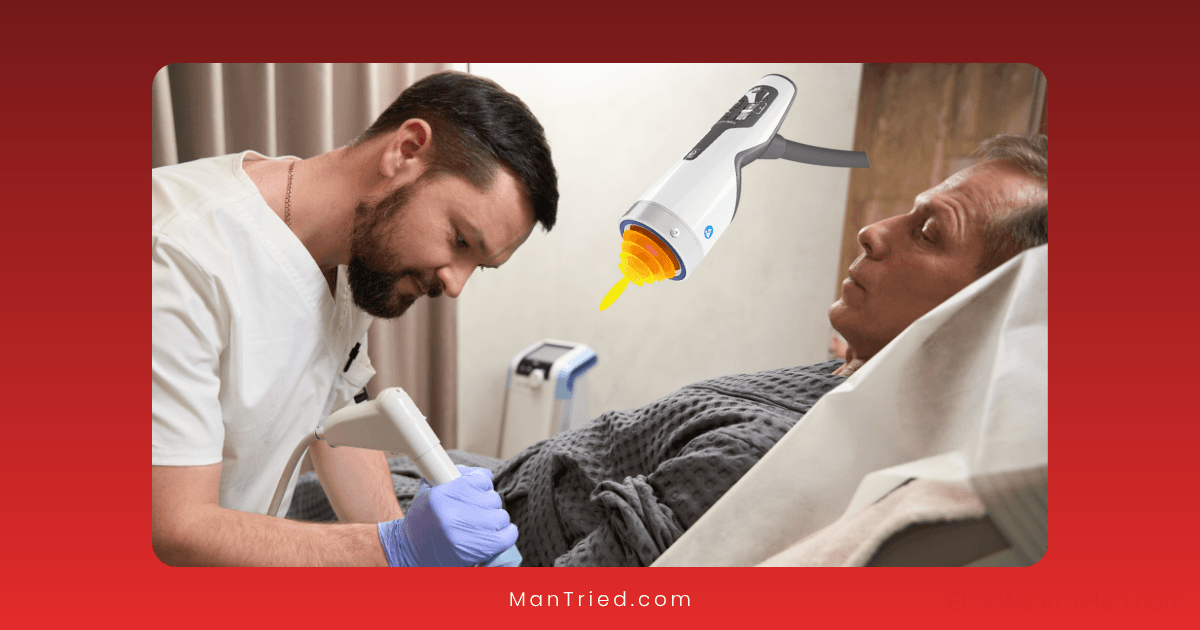
During the Treatment Session
A typical shockwave therapy session follows this sequence:
Positioning: You’ll be positioned comfortably, with the treatment area accessible
Gel application: A water-based gel is applied to the skin to help conduct the acoustic waves
Applicator placement: The provider places the shockwave applicator against your skin over the target area
Initial testing: Treatment begins at a low intensity, which is gradually increased to therapeutic levels
Treatment delivery: The device delivers a series of acoustic pulses to the affected area
Monitoring comfort: Your provider will check your comfort level throughout the session, adjusting intensity as needed
“Most patients describe the sensation as a series of rapid, intense taps or pulses,” says Dr. Sarah Thompson of Bodyworks Physical Therapy. “While it can be uncomfortable, it should remain tolerable—typically around a 5 or 6 on a 10-point pain scale.”
Treatment Parameters
According to research published in the Journal of Clinical Medicine, effective shockwave therapy protocols typically include:
Session duration: 5-15 minutes per treatment area
Energy flux density (EFD):
Low energy: 0.08-0.15 mJ/mm² (often used for tendinopathies)
Medium energy: 0.16-0.28 mJ/mm² (commonly used for most conditions)
High energy: 0.29-0.60 mJ/mm² (typically used for calcifications and bone conditions)
Number of impulses: 1,500-3,000 per session, depending on the condition and area size
Frequency: 8-15 Hz (pulses per second)
Treatment intervals: Typically once per week
Total sessions: Usually 3-6 sessions for most conditions
“These parameters are not one-size-fits-all,” cautions Dr. Robert Johnson, orthopedic surgeon. “Your provider will customize the protocol based on your specific condition, its severity, and your response to treatment.”
Specific Protocols for Common Conditions
Different conditions require tailored approaches. Here are typical protocols for common conditions:
Plantar Fasciitis
Number of sessions: 3-5
Frequency: Once weekly
Impulses per session: 2,000-2,500
Energy level: Medium (0.16-0.25 mJ/mm²)
Special considerations: Treatment focused on the insertion of the plantar fascia at the heel and along the arch
Tennis Elbow (Lateral Epicondylitis)
Number of sessions: 3-5
Frequency: Once weekly
Impulses per session: 2,000
Energy level: Low to medium (0.12-0.18 mJ/mm²)
Special considerations: Treatment targets the lateral epicondyle and affected extensor tendons
Erectile Dysfunction
Number of sessions: 6-12
Frequency: Twice weekly for 3-6 weeks
Impulses per session: 1,500-2,000 per treatment area
Energy level: Low (0.09-0.12 mJ/mm²)
Special considerations: Treatment typically applied to multiple areas around the base of the penis
Achilles Tendinopathy
Number of sessions: 3-5
Frequency: Once weekly
Impulses per session: 2,000-2,500
Energy level: Medium (0.15-0.20 mJ/mm²)
Special considerations: Treatment focused on the painful areas of the tendon, often with the ankle in slight dorsiflexion
Post-Treatment: What to Expect
Immediate After-Effects
Immediately after shockwave therapy, you might experience:
Redness: In the treated area, which typically subsides within a few hours
Mild soreness: Similar to the feeling after an intense workout
Temporary increased pain: Some patients report a temporary increase in symptoms for 24-48 hours
Bruising: Occasionally, especially in areas with thin skin
“These effects are normal and actually indicate that the treatment is triggering the desired healing response,” according to Inspire Wellness & Aesthetics.
Post-Treatment Recommendations
To maximize the benefits of your shockwave therapy, providers typically recommend:
Avoid anti-inflammatory medications: For 2-3 days after treatment, as inflammation is part of the healing process
Light activity: Most patients can return to normal activities immediately, but avoid strenuous exercise for 48 hours
Hydration: Drink plenty of water to support the healing process
Ice (for some conditions): If recommended by your provider, apply ice for 15-20 minutes to reduce discomfort
Complementary exercises: Follow any prescribed stretching or strengthening exercises
Treatment Progression
As you progress through your treatment series, you might notice:
Gradual improvement: Most patients report incremental improvement after each session
Fluctuating symptoms: Some days may be better than others as healing progresses
Cumulative benefits: The full effects of treatment often continue to develop for 2-3 months after your final session
“We find that patients who actively participate in their recommended home exercise program tend to achieve better and more lasting results from shockwave therapy,” notes Dr. Williams.
When to Expect Results
The timeline for results varies based on the condition and individual factors:
Early responders: Some patients report significant relief after just 1-2 sessions
Average response: Most patients notice meaningful improvement after 3-4 sessions
Delayed response: Full benefits may not be apparent until 2-3 months after completing treatment
Long-term outcomes: Studies show that results from successful shockwave therapy can last for years in many cases
Questions to Ask Your Provider
To ensure you’re fully informed about your shockwave therapy protocol, consider asking your provider:
Which type of shockwave therapy (focused or radial) will be used?
How many sessions will my condition likely require?
What specific protocol parameters will be used for my condition?
What success rate do you typically see for my condition?
What complementary treatments or exercises do you recommend?
How soon might I notice improvement?
What are the signs that the treatment is working?
Are there any activities I should avoid during the treatment period?
Conclusion
Shockwave therapy offers a non-invasive, evidence-based approach for treating various musculoskeletal conditions and erectile dysfunction. By understanding the protocols and what to expect during treatment, you can approach this therapy with confidence and realistic expectations.
Remember that while the protocols described here represent typical approaches, your treatment will be customized to your specific condition and needs. Open communication with your healthcare provider throughout the process will help ensure you achieve the best possible results from your shockwave therapy treatment.
Have you undergone shockwave therapy? Share your experience in the comments below.