🛍️ Products
❤️ Health
🌿 Wellness
💪 Performance
🤝 Relationships
🛍️ Products
❤️ Health
🌿 Wellness
💪 Performance
🤝 Relationships

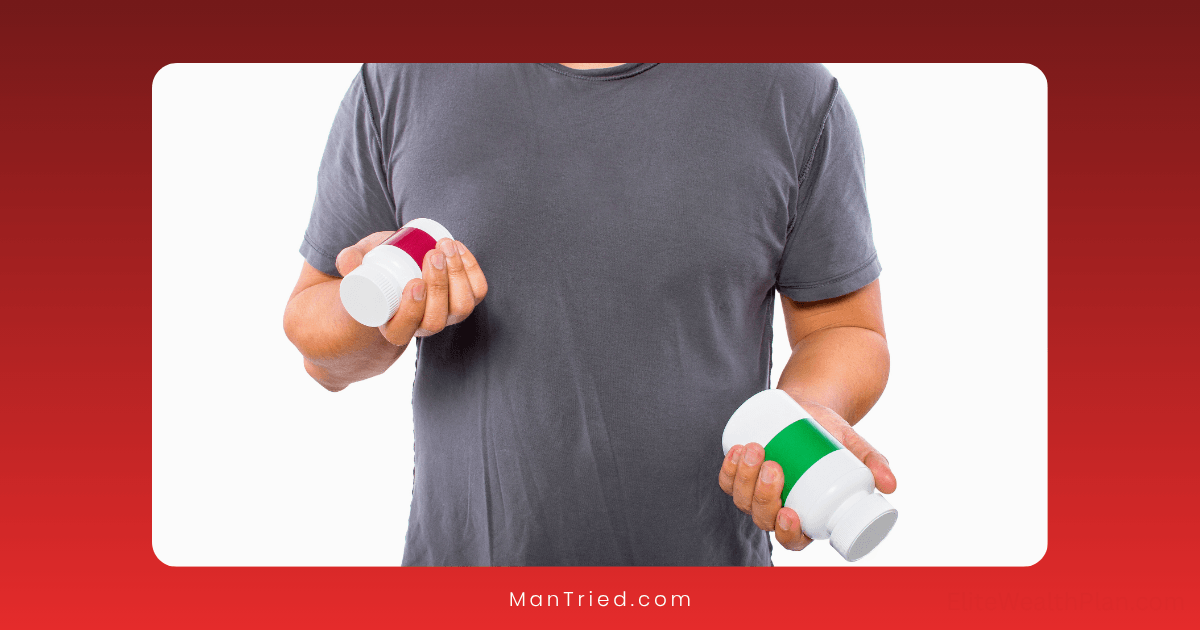
The market for erectile dysfunction (ED) solutions has expanded dramatically in recent years, creating a confusing landscape of options ranging from prescription medications to over-the-counter supplements. With approximately 30 million men in the United States experiencing ED and over 52% of males aged 40-70 affected by some degree of erectile dysfunction, the demand for effective treatments continues to grow.
This comprehensive analysis examines the key differences between prescription ED medications and over-the-counter male enhancement supplements, helping you understand the efficacy, safety, regulatory status, and appropriate use of each option based on the latest research in 2025.
Perhaps the most significant distinction between prescription medications and over-the-counter male enhancement pills lies in their regulatory status.
Prescription ED medications like Viagra (sildenafil), Cialis (tadalafil), Levitra (vardenafil), and Stendra (avanafil) are classified as phosphodiesterase type 5 (PDE5) inhibitors. These medications:
“The FDA approval process ensures that prescription medications have been thoroughly tested for safety and efficacy,” explains Dr. Amin Herati, Director of Male Infertility and Men’s Health at Johns Hopkins Medicine. “This provides both patients and physicians with confidence in the treatment.”
In contrast, over-the-counter male enhancement supplements are classified as dietary supplements, not medications. This distinction has important implications:
According to Ro, a telehealth provider specializing in men’s health, “Over-the-counter male enhancement supplements have not undergone clinical testing like prescription medications for erectile dysfunction, leading to significant concerns about their safety and effectiveness.”
When it comes to effectiveness, the evidence overwhelmingly favors prescription medications.
Clinical trials and real-world data consistently demonstrate the effectiveness of prescription ED medications:
According to GoodRx, all FDA-approved ED medications are considered equally effective, though individual responses may vary.
The efficacy of over-the-counter male enhancement supplements is much less established:
“Most OTC erection products are untested and can contain misreported ingredients,” notes Verywell Health. “Their benefits are largely unproven, and results are typically mild at best.”
Safety concerns differ significantly between prescription medications and over-the-counter supplements.
Prescription ED medications have well-documented side effect profiles:
Common Side Effects:
Serious but Rare Side Effects:
These medications are contraindicated for men taking nitrate medications for heart conditions and should be used with caution by those with cardiovascular disease, liver or kidney problems, or a history of stroke.
The safety profile of over-the-counter supplements is less clear:
The FDA regularly issues warnings about “all-natural” male enhancement products that secretly contain prescription drug ingredients. These hidden pharmaceuticals pose serious risks, particularly for men with heart conditions who may unknowingly take them alongside nitrate medications.
Cost can be a significant factor in treatment decisions, with considerable variation between options.
Prescription ED medications tend to be more expensive upfront but offer more predictable results:
Many telehealth services now offer prescription ED medications at competitive prices, often with free online consultations. Insurance coverage varies, with many plans providing limited or no coverage for ED treatments.
Over-the-counter supplements typically cost less initially but may provide less reliable results:
The lower upfront cost may be offset by the need to try multiple products or take them for extended periods before seeing results, if any occur at all.
The timing of effects differs significantly between prescription medications and supplements.
Prescription ED medications offer relatively predictable onset and duration:
Daily low-dose tadalafil (2.5mg or 5mg) provides continuous coverage, eliminating the need to time doses around sexual activity.
The onset and duration of over-the-counter supplements are much less predictable:
The one exception is Eroxon (MED3000), a topical gel that became the first FDA-cleared over-the-counter treatment for ED in 2023. According to CMH Research Institute, Eroxon works within 10 minutes for 60-70% of users, though this is still lower than the 70-85% effectiveness rate of prescription medications.
The process of obtaining and using these different options varies considerably.
Traditionally, obtaining prescription ED medications required an in-person doctor’s visit, which could be a barrier for some men. However, the landscape has changed significantly:
Despite these improvements, prescription medications still require medical screening to ensure they’re appropriate and safe for the individual.
Over-the-counter supplements offer maximum convenience:
This ease of access is a double-edged sword—while it removes barriers to obtaining treatment, it also eliminates the opportunity for medical evaluation of underlying causes of ED, which could indicate serious health conditions like cardiovascular disease or diabetes.
Different approaches may be more appropriate depending on the underlying cause of erectile dysfunction.
Prescription ED medications work by enhancing blood flow to the penis, making them effective for most physiological causes of ED:
They may be less effective for psychological causes like performance anxiety or relationship issues, though the confidence they provide can indirectly help these issues.
Different supplements claim to address different aspects of sexual function:
However, the evidence for these targeted effects is limited, and supplements rarely address the root causes of ED as effectively as medical treatment combined with lifestyle modifications.
The psychological component of sexual performance can’t be overlooked in comparing these options.
Prescription medications provide a reliable mechanism of action that can give men confidence in their ability to achieve and maintain an erection. This confidence itself can have positive psychological effects that enhance sexual performance.
“For many men, knowing they have taken an effective medication reduces performance anxiety, creating a positive cycle that improves sexual experiences,” explains Dr. Michael Eisenberg, Director of Male Reproductive Medicine at Stanford University.
Some of the benefits reported from over-the-counter supplements may be attributed to the placebo effect—the phenomenon where believing a treatment will work actually produces real improvements in symptoms.
Studies consistently show that placebo effects can be particularly strong for subjective experiences like sexual satisfaction. This doesn’t mean the benefits aren’t real for the individual, but it does suggest that the mechanism may be psychological rather than physiological in many cases.
Some men find that a combination of approaches works best for their needs.
Some evidence suggests that certain supplements may enhance the effectiveness of prescription medications:
However, combining supplements with prescription medications should always be done under medical supervision due to potential interactions.
Regardless of whether one chooses prescription medications or over-the-counter supplements, lifestyle modifications remain the foundation of ED treatment:
These changes address many of the underlying causes of ED and can enhance the effectiveness of any other treatment approach.
When deciding between prescription medications and over-the-counter supplements, consider the following factors:
The gap between prescription ED medications and over-the-counter male enhancement supplements remains significant in 2025. While prescription options offer proven effectiveness with well-understood risks, over-the-counter supplements provide easier access but with less reliable results and more uncertain safety profiles.
The one exception is Eroxon (MED3000), which represents a middle ground as an FDA-cleared over-the-counter option with clinical testing behind it, though its effectiveness still doesn’t match prescription medications.
For most men experiencing erectile dysfunction, starting with a medical consultation provides the safest path forward. This approach allows for:
As telehealth services continue to make medical consultations more accessible and affordable, the barriers to receiving proper medical guidance for ED have diminished significantly. This evolution in healthcare delivery means that men no longer need to choose between convenience and effectiveness—they can increasingly have both.
Ultimately, the best approach to addressing erectile dysfunction is one that considers the individual’s overall health, preferences, and specific situation. By understanding the comparative strengths and limitations of both prescription medications and over-the-counter supplements, men can make informed decisions that support both their sexual health and their overall wellbeing.