Combining Treatments: When One ED Medication Isn’t Enough
For many men, the first experience with erectile dysfunction (ED) medication feels like a miracle—a simple pill that restores confidence and sexual function. But what happens when that miracle fades or never fully materializes? Research consistently shows that 11-44% of men don’t achieve satisfactory results with standard ED pills alone.
If you’re among this group, you’re not out of options. The emerging field of combination therapy for ED offers new hope and significantly improved outcomes for men who don’t respond adequately to single-treatment approaches.
Why Single Treatments Sometimes Fall Short
Before exploring combination strategies, it’s worth understanding why monotherapy might not deliver the results you’re hoping for:
Complex Underlying Causes
ED rarely has a single cause. Most cases involve a combination of:
Vascular issues: Restricted blood flow to the penis
Neurological factors: Nerve damage from surgery, diabetes, or injury
Hormonal imbalances: Low testosterone or thyroid issues
Psychological components: Anxiety, depression, or relationship concerns
Medication side effects: From blood pressure medications, antidepressants, etc.
When multiple factors are at play, a single-mechanism treatment may not address all the underlying issues.
Treatment Resistance
Several factors can contribute to treatment resistance:
Severe vascular disease: Significant blood vessel damage may require more than one approach to overcome
Diabetes-related complications: Both vascular and nerve damage
Post-surgical changes: Particularly after prostate cancer treatment
Aging-related changes: Multiple systems affected simultaneously
Diminishing Returns
Some men experience “tachyphylaxis”—a diminishing response to medication over time. This doesn’t mean the medication has stopped working entirely, but that its effectiveness has decreased, potentially necessitating a combination approach.
The Science Behind Combination Therapy
Combination therapy works by targeting multiple pathways involved in achieving and maintaining erections:
Key Pathways in Erectile Function
Nitric oxide (NO) production: Initiates the erection process
cGMP accumulation: Relaxes smooth muscle in penile tissue
Arterial dilation: Increases blood flow into the penis
Venous occlusion: Prevents blood from leaving the penis
Nerve signaling: Coordinates the entire process
Different treatments target different pathways, and combining them can create synergistic effects that are greater than the sum of their parts.
Effective Combination Strategies
Research and clinical practice have identified several effective combination approaches:
1. Multiple Medication Combinations
PDE5 Inhibitor + PDE5 Inhibitor
Yes, combining different ED medications can sometimes work better than using just one:
Sildenafil + Tadalafil: The most studied combination, now available as Ro Sparks, a sublingual tablet containing 50mg sildenafil and 22mg tadalafil
Benefits: Faster onset (as quick as 15 minutes), longer duration (up to 36 hours), and potentially greater efficacy
Considerations: Increased risk of side effects; should be medically supervised
How it works: The injection delivers vasodilators directly to penile tissue while the oral medication enhances the overall response
Benefit: Lower injection doses may be effective when combined with oral medication, reducing side effects
Consideration: Requires comfort with self-injection and medical supervision
Intraurethral Suppository + PDE5 Inhibitor
Mechanism: The suppository (MUSE) delivers alprostadil directly to urethral tissue while the oral medication enhances the response
Advantage: Less invasive than injections but more direct than oral medication alone
Success rates: Combined therapy shows improved results in men who failed with either treatment alone
4. Multi-Modal Therapy Protocols
Modern approaches often combine multiple treatment modalities for comprehensive results:
The REGENmax Protocol
This comprehensive approach includes:
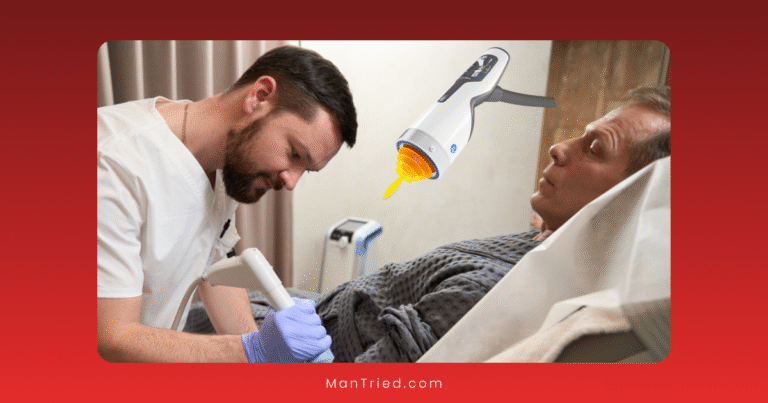
REGENwave: Low-intensity shockwave therapy to stimulate blood vessel growth
REGENlase: Nd:YAG laser treatment to enhance tissue regeneration
HEshot: Tissue regenerative factors to support cellular repair
Hormone optimization: To address any underlying hormonal imbalances
According to Wellness OB-GYN, this multi-modal approach shows significant improvements in men who did not respond adequately to oral medications alone.
Electromagnetic + Biochemical Approaches
As described by Man’s Matters, these protocols combine:
Focused Shockwave Therapy: For improved circulation
Electromagnetic Transduction Therapy (EMTT): For cellular regeneration
Photoactivation: Using specific light wavelengths to enhance nitric oxide availability
NanoVi Exo: To address oxidative stress
Tesla Chair: For pelvic floor muscle stimulation
NESA X-Signal: Neurostimulation to enhance nerve pathways
Emerging Research in Combination Therapy
Recent scientific advances point to promising new combination approaches:
Duration: Potentially longer-lasting results than medication alone
Stem Cell Therapy + Oral Medications
Still in clinical trials, this combination shows promise for:
Regenerating damaged penile tissues
Stimulating new blood vessel growth
Enhancing sensitivity
Improving overall response to oral medications
Who Should Consider Combination Therapy?
Combination therapy isn’t for everyone. It’s typically recommended for:
Non-responders to monotherapy: Men who have tried maximum doses of PDE5 inhibitors without success
Partial responders: Those who get some benefit but not enough for satisfactory sexual function
Men with multiple risk factors: Particularly those with diabetes, cardiovascular disease, and post-prostatectomy
Those experiencing diminishing returns: Men who initially responded well to medication but have noticed decreasing effectiveness
Discussing Combination Therapy With Your Doctor
If you’re considering combination approaches, here’s how to have a productive conversation with your healthcare provider:
Questions to Ask
“Given my specific health situation, which combination approach might work best for me?”
“What are the potential interactions between these treatments?”
“How should I time or sequence these different approaches?”
“What side effects should I watch for with this combination?”
“Are there any lifestyle changes that would enhance this combination’s effectiveness?”
Information to Share
Be prepared to discuss:
Your complete medical history, including all medications
Your specific ED symptoms and when they occur
Previous treatments you’ve tried and their results
Your goals and expectations for treatment
Potential Risks and Considerations
While combination therapy offers significant benefits, it also comes with considerations:
Increased Side Effect Risk
Additive effects: Combining treatments may increase the likelihood or severity of side effects
Blood pressure concerns: Multiple vasodilating treatments can potentially cause dangerous drops in blood pressure
Priapism risk: Some combinations may increase the risk of prolonged, painful erections
Cost Considerations
Multiple treatments generally mean higher costs
Insurance coverage for combination therapy is often limited
Some newer approaches may not be covered at all
Complexity of Use
Multiple treatments require careful timing and coordination
Some combinations require significant patient education and practice
The Future of Combination Therapy
The field of combination therapy for ED is rapidly evolving:
Personalized medicine approaches: Using genetic and biomarker testing to determine optimal combinations
Nanotechnology delivery systems: Targeting multiple pathways with precision
Regenerative medicine integration: Combining medications with tissue regeneration approaches
Wearable technology: Devices that deliver multiple treatments simultaneously
The Bottom Line
When a single ED treatment falls short, combination therapy offers a scientifically sound approach to improving outcomes. By targeting multiple aspects of erectile function simultaneously, these approaches can help restore sexual function even in difficult-to-treat cases.
The key is working with knowledgeable healthcare providers who understand the complexities of ED and can tailor combination approaches to your specific needs. While it may take some trial and error to find the right combination, the potential rewards—restored sexual function and confidence—make the journey worthwhile.
Have you tried combination approaches for ED? Share your experiences in the comments below.