🛍️ Products
❤️ Health
🌿 Wellness
💪 Performance
🤝 Relationships
🛍️ Products
❤️ Health
🌿 Wellness
💪 Performance
🤝 Relationships

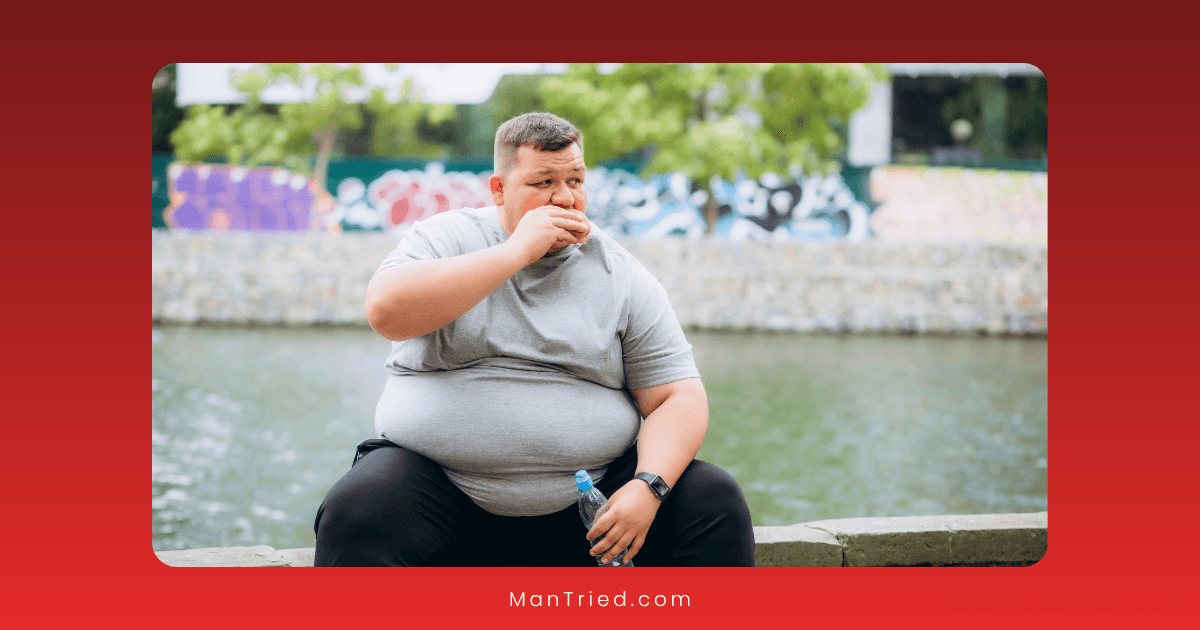
For many men struggling with weight issues, the battle extends far beyond aesthetics or even cardiovascular health. There’s a hidden hormonal component that creates a frustrating cycle: obesity lowers testosterone, and low testosterone makes it harder to lose weight.
“I was caught in a downward spiral,” explains James, a 42-year-old who successfully lost 65 pounds over 18 months. “The heavier I got, the more tired and unmotivated I felt. The less energy I had, the harder it was to exercise and eat right. It wasn’t until my doctor tested my testosterone that I understood what was happening.”
James’s experience isn’t unusual. According to recent research published in the National Library of Medicine, up to 40% of obese men experience hypogonadal symptoms—the clinical term for low testosterone and its effects. Even more concerning, men with obesity have an eight-fold higher risk of low testosterone compared to men at a healthy weight.
This article explores the bidirectional relationship between obesity and testosterone, explains the science behind this connection, and offers evidence-based strategies for breaking this challenging cycle.
The relationship between obesity and testosterone isn’t a simple cause-and-effect scenario—it’s a complex, bidirectional cycle where each factor influences and worsens the other.
Several mechanisms explain why carrying excess fat, particularly around the midsection, can significantly reduce testosterone levels:
Body fat, especially visceral (belly) fat, contains high levels of an enzyme called aromatase. This enzyme converts testosterone into estradiol, a form of estrogen.
“Think of your belly fat as a testosterone-destroying factory,” explains Dr. Michael Jensen, an endocrinologist specializing in obesity medicine. “The more fat cells you have, especially around your abdomen, the more testosterone gets converted to estrogen.”
According to Hims, this increased estrogen can then further suppress testosterone production by affecting the hypothalamic-pituitary-gonadal (HPG) axis, creating a snowball effect.
Obesity often leads to insulin resistance, a condition where cells don’t respond properly to insulin. This metabolic dysfunction is directly linked to reduced testosterone production in the testes.
Research from 2025 indicates that insulin resistance may reduce testosterone production by up to 25% in otherwise healthy men.
Excess fat tissue produces inflammatory molecules called cytokines, which can directly inhibit testicular function and testosterone production.
Obesity significantly increases the risk of obstructive sleep apnea and other sleep disorders. According to research cited by Hims, just one week of restricted sleep can reduce testosterone production by 10-15%.
On the flip side, low testosterone levels make it physiologically harder to maintain a healthy weight:
Testosterone is an anabolic hormone that promotes protein synthesis and muscle development. When levels drop, men typically lose muscle mass—which lowers metabolic rate and makes weight gain more likely.
Studies show that men with low testosterone have, on average, 3-5 pounds less muscle mass than age-matched controls with normal testosterone levels.
Low testosterone alters how the body stores energy, favoring fat deposition, particularly in the abdominal area. This creates a vicious cycle, as more belly fat leads to even lower testosterone.
Testosterone influences energy levels, motivation, and mood—all crucial factors for maintaining an active lifestyle and healthy eating habits.
“When my testosterone was low, just getting off the couch felt like climbing a mountain,” shares Robert, 55, who improved his hormone levels through weight loss. “It wasn’t laziness—I physically and mentally couldn’t summon the energy to exercise.”
Testosterone plays a key role in glucose metabolism and insulin sensitivity. Low levels can worsen insulin resistance, promoting fat storage and making weight loss more difficult.
The statistical relationship between obesity and testosterone is striking:
These statistics highlight both the severity of the problem and the potential for improvement through weight management.
The good news is that this cycle can be broken, and addressing either side of the equation—weight loss or testosterone levels—can create positive momentum. Here are the most effective approaches:
Not all weight loss diets are created equal when it comes to testosterone. According to research published in the National Library of Medicine, certain dietary patterns show particular promise:
What to avoid? Crash diets and severe caloric restriction can actually further lower testosterone levels. Aim for moderate, sustainable caloric deficits of 500-750 calories per day.
Exercise is powerful medicine for both weight management and hormonal health, but specific approaches yield the best results:
Given the profound impact of sleep on testosterone production, addressing sleep quality is essential:
Chronic stress elevates cortisol, which directly suppresses testosterone production:
For men with significant obesity and documented low testosterone, medical interventions may be appropriate:
For those with severe obesity, bariatric surgery offers the most dramatic results:
While not a weight loss treatment per se, TRT can help break the cycle for men with clinically low testosterone:
It’s important to note that TRT should only be considered after thorough testing confirms low testosterone levels, and the benefits and risks should be carefully weighed for each individual.
Several nutrients play key roles in testosterone production and should be prioritized:
The psychological aspects of this cycle shouldn’t be overlooked:
David, 48, had struggled with his weight since his mid-30s. At 285 pounds (BMI 38), he was diagnosed with testosterone levels of 230 ng/dL (normal range: 300-1000 ng/dL).
“My doctor offered testosterone replacement, but I wanted to try lifestyle changes first,” David explains. “I started with resistance training three times weekly and switched to a Mediterranean diet pattern.”
After six months, David had lost 35 pounds, and his testosterone had increased to 340 ng/dL. By the one-year mark, he was down 55 pounds with testosterone at 410 ng/dL—all without hormone therapy.
“The hardest part was getting started,” he says. “Once I began seeing improvements in my energy and mood, it created a positive spiral instead of a negative one.”
Miguel, 52, found that lifestyle changes alone weren’t sufficient. With a BMI of 42 and testosterone of 180 ng/dL, he experienced severe fatigue that made exercise nearly impossible.
“My endocrinologist suggested starting TRT while simultaneously working with a dietitian and trainer,” Miguel shares. “The testosterone therapy gave me the energy to implement the lifestyle changes I needed.”
Within three months, Miguel had lost 20 pounds and was consistently exercising. After a year, he had lost 70 pounds and was able to reduce his testosterone dosage as his natural production improved.
Research in 2025 is increasingly focused on personalized approaches to breaking the obesity-testosterone cycle:
The obesity-testosterone connection creates a challenging cycle, but understanding this bidirectional relationship is the first step toward breaking it. Whether you start with weight loss efforts or address testosterone levels directly (under medical supervision), creating positive momentum in either direction can lead to improvements in both.
For most men, a comprehensive approach works best: a sustainable nutrition plan, regular resistance training, sleep optimization, stress management, and appropriate medical interventions when necessary. With patience and consistency, the cycle can be reversed, leading to improvements in body composition, energy, mood, and overall quality of life.
If you suspect low testosterone might be affecting your weight loss efforts, speak with a healthcare provider about appropriate testing and personalized interventions. Breaking this cycle is challenging, but with the right approach, it’s absolutely achievable.
Have you experienced the connection between weight and testosterone levels? What strategies helped you break the cycle? Share your experiences in the comments below to help others facing similar challenges.