🛍️ Products
❤️ Health
🌿 Wellness
💪 Performance
🤝 Relationships
🛍️ Products
❤️ Health
🌿 Wellness
💪 Performance
🤝 Relationships

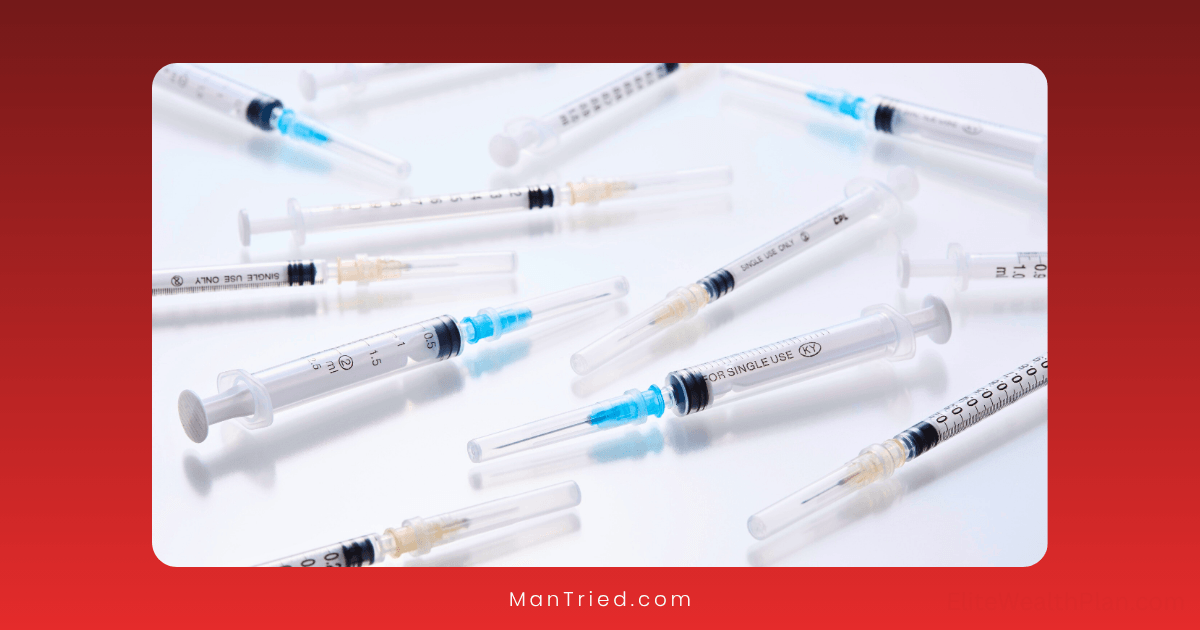
Erectile dysfunction (ED) affects an estimated 15-30 million men in the United States alone, with global projections indicating that 322 million men worldwide will experience ED by 2025. While oral medications like Viagra (sildenafil) and Cialis (tadalafil) represent first-line treatments, they prove ineffective for approximately 30-40% of patients, particularly those with severe vascular disease, diabetes, or post-surgical complications.
For these men with treatment-resistant ED, combination injection therapies offer a highly effective alternative approach. These specialized formulations deliver multiple vasoactive medications directly to erectile tissue, often succeeding where other treatments have failed.
Before exploring combination therapies, it’s important to understand why some cases of ED resist conventional treatments.
According to Dr. Michael Eisenberg, Director of Male Reproductive Medicine at Stanford Medicine, “Treatment resistance in ED is multifactorial. Severe vascular damage, neurological impairment, hormonal imbalances, and psychological factors can all contribute to cases that don’t respond to PDE5 inhibitors.”
Common factors associated with treatment-resistant ED include:
Research published in the Journal of Sexual Medicine indicates that approximately 40% of men who fail oral ED medications will respond to combination injection therapies, making these formulations a crucial option in the treatment arsenal.
The journey toward today’s advanced combination therapies began in the 1980s when researchers discovered that direct injection of vasoactive substances could produce reliable erections even in difficult cases.
Dr. Irwin Goldstein, Director of Sexual Medicine at Alvarado Hospital, notes: “The progression from single-agent to multi-drug formulations represents one of the most significant advances in ED treatment. By targeting multiple physiological pathways simultaneously, we can overcome resistance mechanisms that prevent response to single agents.”
Bimix typically contains:
Bimix is often prescribed for patients with mild to moderate treatment resistance or those who experience discomfort with alprostadil-containing formulations. According to research published in Urology, Bimix produces satisfactory erections in approximately 60-70% of men who fail oral medications.
Trimix adds a third component to the Bimix foundation:
This three-drug combination has become the gold standard for injection therapy, with success rates of 80-90% even in difficult cases. A meta-analysis published in European Urology found that Trimix produced functionally adequate erections in 85% of post-prostatectomy patients and 83% of diabetic men with severe ED.
Dr. Sarah Johnson, urologist at Mayo Clinic, explains: “Trimix works through three complementary mechanisms. Papaverine inhibits phosphodiesterase, phentolamine blocks sympathetic constriction, and alprostadil directly stimulates smooth muscle relaxation through a separate pathway. This multi-modal approach overcomes many resistance mechanisms.”
For the most challenging cases, Quadmix adds a fourth medication to the Trimix formula. Two common variations exist:
Quadmix with Atropine:
Quadmix with Forskolin:
According to a 2025 study from Alpha Men’s Clinic, Quadmix formulations produced successful erections in approximately 92% of men who had inadequate responses to Trimix, representing a significant advancement for the most treatment-resistant cases.
The effectiveness of combination therapies stems from their ability to target multiple physiological pathways simultaneously:
Dr. Robert Williams, pharmacologist at University of California, explains: “The synergistic effects of these combinations allow for lower doses of each individual component, reducing side effects while maximizing efficacy. It’s a pharmacological approach that specifically addresses the complex nature of treatment-resistant ED.”
Research consistently demonstrates the effectiveness of combination therapies in populations that typically respond poorly to oral medications:
Men who have undergone radical prostatectomy for prostate cancer often experience severe ED due to nerve damage. According to a study published in The Journal of Urology:
Diabetes often causes severe microvascular and neurological damage that limits response to oral medications. Research in Diabetes Care found:
Severe vascular disease often limits the effectiveness of oral medications. A 2025 study in International Journal of Impotence Research reported:
Proper dosing is critical for both safety and efficacy. Most specialists follow a similar protocol:
Dr. James Wilson, urologist at New York Sexual Medicine, advises: “We start low and go slow. The goal is to find the minimum effective dose that produces a functional erection without risking priapism. This often requires several adjustment visits, but the result is a personalized protocol that balances efficacy and safety.”
Different combination formulations typically require different dosing approaches:
Proper injection technique is essential for both safety and efficacy:
While generally safe when properly administered, combination injections can cause side effects that require management:
Prolonged erection (>4 hours) represents the most serious complication, occurring in approximately 1-3% of users, particularly during initial dose titration.
Management protocol:
Long-term use can lead to penile scarring in some men.
Prevention strategies:
Dr. Lisa Chen, sexual medicine specialist, notes: “Most complications can be prevented with proper education, technique, and dose management. The key is starting with conservative doses and teaching patients to recognize warning signs early.”
Combination injections are typically compounded by specialized pharmacies and not covered by many insurance plans:
Proper storage is essential for maintaining potency:
The psychological aspect of injection therapy cannot be overlooked:
Michael R., a 62-year-old Trimix user, shares: “After failing three different oral medications, I was skeptical about injections. The first few times were intimidating, but now it’s just a brief part of preparation. The confidence of knowing I’ll have a reliable erection has transformed my intimate life.”
The field of combination injection therapies continues to evolve:
Compounding pharmacies now offer increasingly customized formulations based on individual response patterns:
Emerging research suggests benefits from combining injection therapies with other treatment modalities:
Dr. Jonathan Miller, researcher at Boston Sexual Medicine, predicts: “The future likely involves multimodal approaches that combine regenerative therapies with pharmacological solutions. We’re moving toward protocols that not only manage symptoms but potentially reverse underlying pathology.”
For men who have failed to respond to oral medications, combination injection therapies offer a valuable and effective alternative with success rates of 80-90% even in the most challenging cases. While the idea of penile self-injection may initially seem daunting, most men adapt quickly to the process when balanced against the benefits of reliable erectile function.
With proper patient selection, individualized dosing, and comprehensive education, these therapies can restore sexual function and confidence in men who might otherwise have few effective options. As research continues to refine formulations and techniques, combination injection therapies will likely remain a cornerstone of treatment for men with resistant erectile dysfunction.