🛍️ Products
❤️ Health
🌿 Wellness
💪 Performance
🤝 Relationships
🛍️ Products
❤️ Health
🌿 Wellness
💪 Performance
🤝 Relationships


Male sexual health issues, particularly erectile dysfunction (ED), affect millions of men worldwide, with profound impacts on quality of life, relationships, and psychological well-being. According to recent epidemiological studies, approximately 322 million men globally experience ED, with projections suggesting this number could double by 2025. While conventional treatments like phosphodiesterase-5 inhibitors (PDE5i) have dominated the landscape for decades, they primarily offer symptomatic relief rather than addressing underlying tissue damage.
Enter the revolutionary field of regenerative medicine—approaches that aim not merely to manage symptoms but to restore and regenerate damaged tissues at the cellular level. This article explores the cutting-edge science behind tissue regeneration in male sexual health, examining the mechanisms, evidence, and future directions of these promising therapies.
To appreciate how regenerative therapies work, we must first understand the complex architecture of penile tissue and how it functions in healthy sexual response.
The penis contains three cylindrical chambers:
“The corpora cavernosa are essentially specialized vascular structures designed to fill with blood during arousal,” explains Dr. Jonathan Clavell, urologist and men’s health specialist. “They’re composed of a sponge-like tissue called trabecular smooth muscle, surrounded by the tunica albuginea, a tough fibrous sheath that helps trap blood during erection.”
At the cellular level, several key components are essential for normal erectile function:
According to research published in the Journal of Sexual Medicine, dysfunction in any of these components can lead to ED, with vascular causes accounting for approximately 60% of cases.
Several factors can damage penile tissue and contribute to sexual dysfunction:
A 2022 study published in Nature Reviews Urology found that these various forms of tissue damage often coexist and interact, creating complex pathophysiology that simple pharmaceutical interventions cannot fully address.
Several regenerative therapies are showing promise in restoring tissue function and structure in male sexual health:
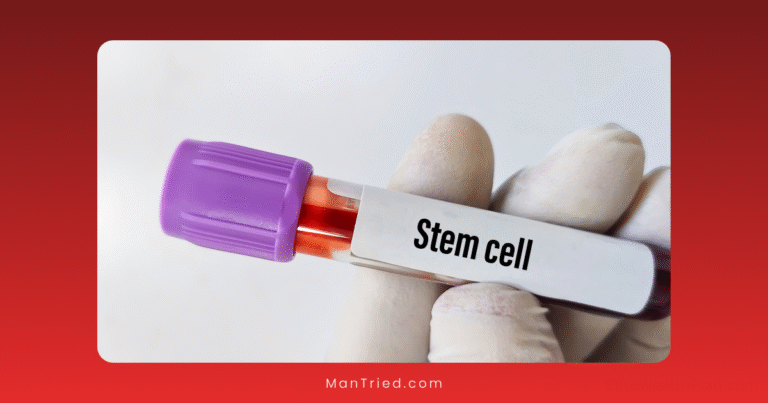
Stem cells—undifferentiated cells capable of developing into many different cell types—represent one of the most exciting frontiers in regenerative medicine for male sexual health.
According to research published in Stem Cell Research & Therapy, mesenchymal stem cells (MSCs) contribute to tissue regeneration through several mechanisms:
“What’s particularly exciting about stem cells is that they don’t just target one aspect of erectile function—they can potentially address multiple underlying causes simultaneously,” notes Dr. Amanda Rodriguez, regenerative medicine researcher at Stanford University.
A systematic review of clinical trials published in the International Journal of Impotence Research analyzed 8 human studies involving 274 patients receiving various forms of stem cell therapy for ED. Key findings included:
Several types of stem cells are being investigated:
PRP therapy, sometimes marketed as the “P-Shot” or “Priapus Shot,” involves concentrating platelets from the patient’s own blood and injecting them into penile tissue.
“Platelets are cellular fragments that contain over 800 different proteins and growth factors,” explains Dr. Robert Cohen, a specialist in regenerative medicine. “When concentrated and injected into damaged tissue, these growth factors can stimulate healing and regeneration.”
Key growth factors in PRP include:
A 2018 pilot study published in Sexual Medicine Reviews involving 60 men with mild to moderate ED reported:
However, larger randomized controlled trials are still needed to definitively establish efficacy.
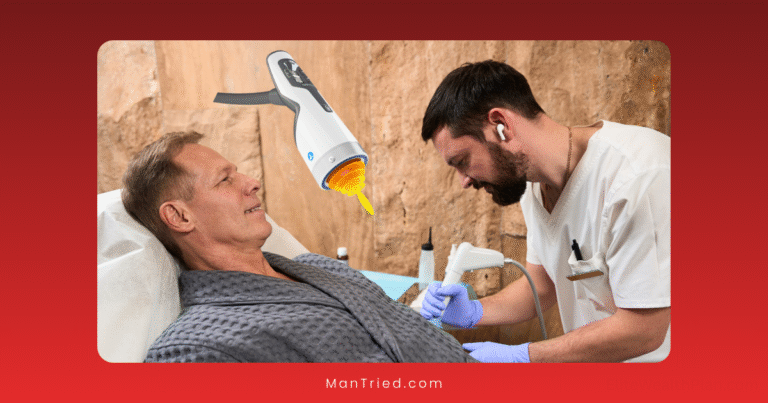
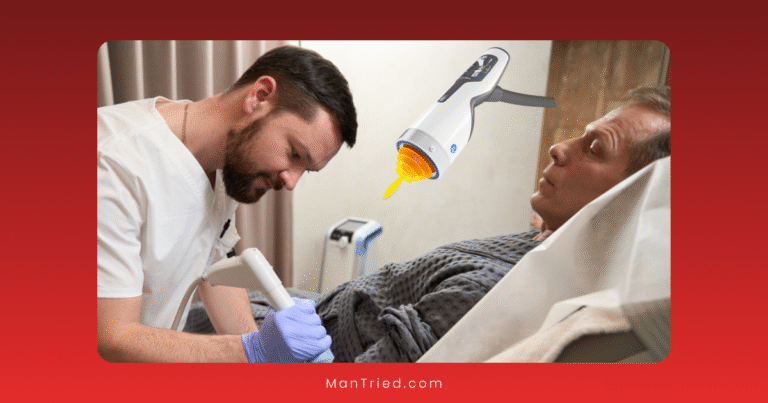
LI-ESWT uses acoustic waves to stimulate regenerative processes in penile tissue.
According to research published in the National Library of Medicine, LI-ESWT promotes tissue regeneration through:
A meta-analysis of 10 randomized controlled trials with 873 participants published in the International Journal of Impotence Research found:
“What’s particularly appealing about shockwave therapy is its non-invasive nature and cumulative effects,” says Dr. James Wilson, urologist at Mayo Clinic. “Many patients continue to see improvements for months after completing the treatment protocol.”
An emerging area of research focuses on extracellular vesicles—tiny membrane-bound particles released by cells that can transfer proteins, lipids, and genetic material between cells.
Research published in Stem Cell Research & Therapy indicates that exosomes (a type of EV) derived from mesenchymal stem cells may offer similar benefits to whole-cell therapy with several advantages:
While still primarily in preclinical stages, animal studies have shown promising results:
“Exosome therapy represents the next frontier in regenerative medicine for sexual health,” notes Dr. Sarah Thompson, researcher at the Institute for Regenerative Medicine. “It potentially offers the benefits of stem cell therapy without some of the limitations and concerns.”
Emerging research suggests that combining multiple regenerative approaches may yield superior results compared to single modalities.
A 2023 study in the Journal of Sexual Medicine examined the combination of LI-ESWT and PRP in 120 men with moderate ED. The researchers found:
“Different regenerative approaches appear to work through complementary mechanisms,” explains Dr. Michael Stevens, professor of urology at Johns Hopkins. “Shockwave therapy may create an optimal environment for stem cells or growth factors to work more effectively.”
The future likely involves tailored approaches based on individual patient factors:
Despite promising results, several challenges remain:
Several exciting developments are on the horizon:
The science of tissue regeneration represents a fundamental shift in how we approach male sexual health—moving from symptom management to addressing root causes through tissue repair and regeneration. While many of these approaches are still evolving, the growing body of evidence suggests that regenerative medicine will play an increasingly important role in treating conditions like erectile dysfunction.
For men experiencing sexual health issues, these advances offer hope beyond traditional treatments, potentially restoring not just function but also the underlying tissue health. As research continues to advance and clinical evidence accumulates, regenerative approaches may eventually become standard care in male sexual health.