🛍️ Products
❤️ Health
🌿 Wellness
💪 Performance
🤝 Relationships
🛍️ Products
❤️ Health
🌿 Wellness
💪 Performance
🤝 Relationships

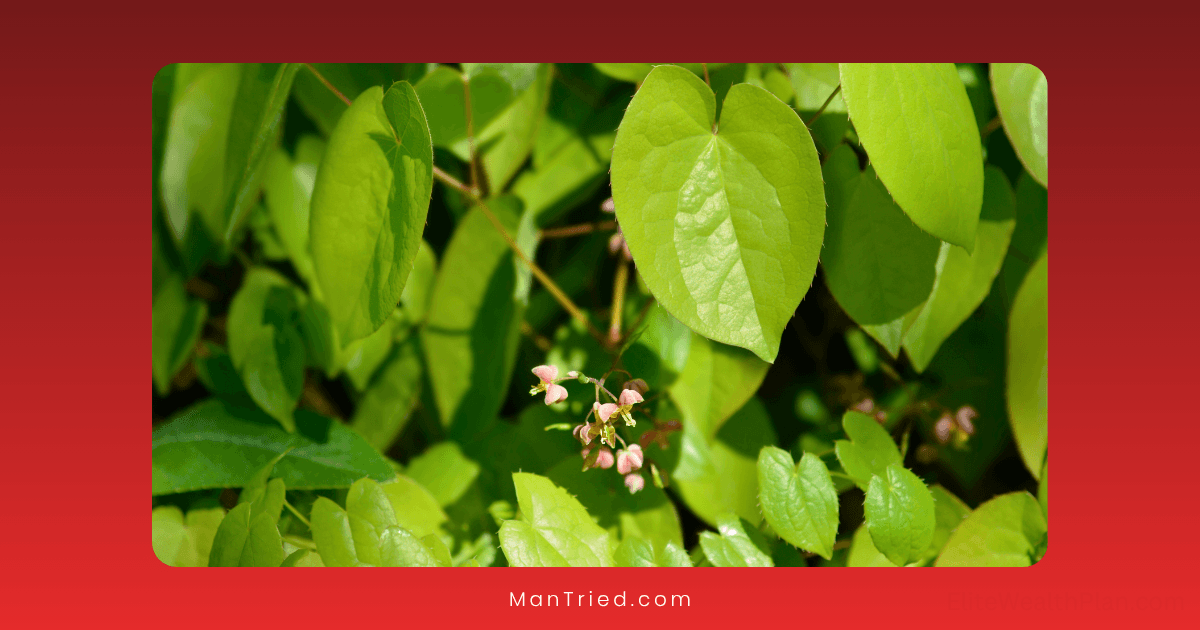
The name might make you chuckle, but behind the provocative title lies one of traditional Chinese medicine’s most treasured herbs. For over 2,000 years, horny goat weed has been prescribed for everything from joint pain to flagging libido. Today, as modern science begins to unravel its mechanisms of action, this ancient remedy is finding new applications in contemporary wellness routines.
But what exactly is horny goat weed, and does it live up to its suggestive name? Let’s explore the fascinating journey of this herb from ancient Chinese apothecaries to modern supplement shelves.
According to Chinese folklore, the herb earned its colorful nickname when a goat herder noticed his flock becoming noticeably more… amorous… after grazing on a particular plant. This observation led to the Chinese name “Yin Yang Huo,” which roughly translates to “licentious goat plant.” When the herb made its way to Western markets, the more direct “horny goat weed” became its common name.
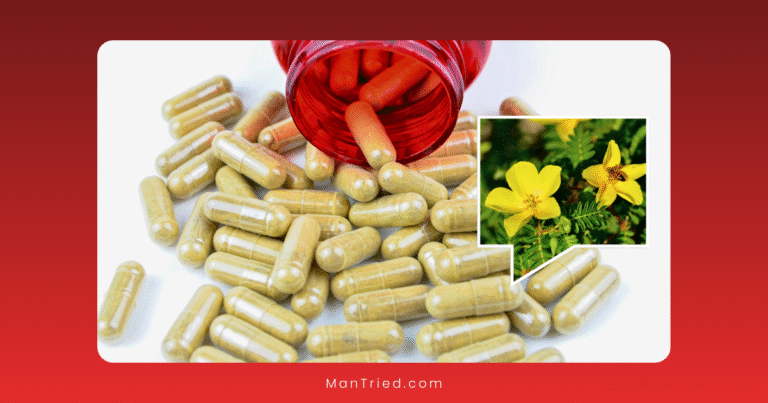
Beyond the amusing origin story, this herb (botanically known as Epimedium) comprises multiple species used in traditional medicine. The most commonly used varieties include Epimedium sagittatum, Epimedium brevicornum, and Epimedium grandiflorum.
In traditional Chinese medicine (TCM), horny goat weed is classified as a “Yang tonic” that invigorates the kidneys. According to research published in 2023, this classification aligns with its traditional use for addressing what TCM practitioners call “kidney qi deficiency”—a condition associated with aging and manifesting as sexual dysfunction, fatigue, and lower back pain.
For centuries, TCM practitioners have prescribed horny goat weed for:
Traditionally, the herb was prepared as a decoction (strong tea) or incorporated into herbal formulas tailored to individual patients’ needs. These preparations would typically use the aerial parts (leaves and stems) of the plant, which contain the highest concentration of active compounds.
Modern research has identified numerous bioactive compounds in horny goat weed, with icariin emerging as the star player. This prenylated flavonoid glycoside is responsible for many of the herb’s reported benefits, particularly those related to sexual function.
According to a comprehensive review on Examine.com, icariin functions through several mechanisms:
Interestingly, while icariin works through similar pathways as pharmaceutical PDE5 inhibitors, its potency is significantly lower—requiring higher doses to achieve comparable effects. However, this lower potency may also contribute to its potentially milder side effect profile.
As scientific interest in traditional remedies grows, researchers have conducted numerous studies on horny goat weed and its active compounds. Here’s what the evidence suggests about its various applications:
The most well-known application of horny goat weed is for male sexual dysfunction, particularly erectile difficulties. According to Medical News Today, animal and cellular studies suggest icariin may help treat erectile dysfunction, especially when it results from nerve injury.
A systematic review found that horny goat weed is a common ingredient in testosterone and erectile dysfunction supplements, though large-scale human clinical trials are still lacking. The existing evidence suggests it may:
While less studied than its effects in men, horny goat weed shows promise for women’s sexual health as well. Research indicates potential benefits for:
A 2020 study noted by Medical News Today found that horny goat weed might improve endometrial thickness in women with thin endometrium, potentially aiding fertility and embryo implantation.
One of the most scientifically supported benefits of horny goat weed relates to bone health. According to WebMD, a specific extract of horny goat weed taken for 24 months, combined with calcium supplements, decreases bone loss in postmenopausal women better than calcium alone.
Research on Examine.com indicates that icariin at doses of 60 mg daily for 2 years showed significant attenuation of bone mineral density loss in postmenopausal women. This makes horny goat weed a potential complementary approach for osteoporosis prevention and management.
Some studies suggest horny goat weed may benefit cardiovascular health through:
A mixture containing horny goat weed may benefit individuals with atherosclerosis, improving symptoms and clinical markers, though more research is needed to isolate the specific effects of horny goat weed alone.
Beyond these established applications, researchers are exploring horny goat weed’s potential in several exciting areas:
One of the most interesting developments in horny goat weed research involves its combination with other traditional remedies. For instance, the synergistic effects of horny goat weed and maca root have gained attention.
According to My Daily Defense, this combination may enhance:
This approach mirrors traditional Chinese medicine’s emphasis on herbal formulations rather than single herbs—a principle increasingly validated by modern research on herbal synergy.
If you’re considering trying horny goat weed, quality matters significantly. Here’s what to look for:
Look for products standardized to contain a specific percentage of icariin, the primary active compound. According to My Daily Defense, effective products should contain 10-60% icariin for noticeable effects; lower concentrations may indicate fillers.
Horny goat weed is available in several forms:
Based on the available research, typical dosages range from 250 to 500 mg per day of extract, ideally standardized for icariin content. For specific applications like bone health, studies have used 60 mg of pure icariin daily.
Some experts recommend cycling horny goat weed (e.g., 5 days on, 2 days off) to prevent tolerance development. Taking it earlier in the day may be advisable, as some users report increased energy that could interfere with sleep if taken in the evening.
While horny goat weed has been used safely for centuries in traditional medicine, modern research has identified some important safety considerations:
According to Very Well Health, common side effects may include:
More serious side effects, particularly with long-term use or high doses, can include:
Horny goat weed may not be suitable for everyone. Exercise caution if you:
Horny goat weed may interact with several medications, including:
Always consult with a healthcare provider before starting any supplement, especially if you take medications or have existing health conditions.
As interest in natural remedies continues to grow, horny goat weed research is expanding in several promising directions:
Researchers are investigating icariin and its derivatives as potential leads for new drug development, particularly for erectile dysfunction, osteoporosis, and neurodegenerative conditions.
Scientists are working on enhancing icariin’s relatively poor bioavailability (approximately 12%) through advanced delivery systems and formulations.
Studies are exploring how horny goat weed works synergistically with other herbs and conventional treatments to enhance efficacy and reduce side effects.
Emerging research is investigating applications beyond the traditional uses, including metabolic health, immune function, and longevity.
Horny goat weed represents a fascinating example of how traditional remedies are finding validation and refinement through modern scientific methods. While more research—particularly large-scale human clinical trials—is needed to fully establish its efficacy for various conditions, the existing evidence suggests this ancient herb may have legitimate applications in contemporary health care.
From its humble origins in Chinese folklore to its presence in cutting-edge research, horny goat weed continues to intrigue both traditional practitioners and modern scientists. Whether you’re interested in its potential benefits for sexual health, bone density, or overall vitality, this herb offers a glimpse into the ongoing dialogue between ancient wisdom and modern applications.
As with any supplement, approach horny goat weed with informed caution: consult healthcare providers, start with conservative doses, and pay attention to how your body responds. The most effective wellness approaches often combine the best of traditional knowledge with contemporary scientific understanding—a philosophy perfectly embodied by this ancient herb with the amusing name.
Have you tried horny goat weed or other traditional herbs for sexual health? Share your experience in the comments below!