🛍️ Products
❤️ Health
🌿 Wellness
💪 Performance
🤝 Relationships
🛍️ Products
❤️ Health
🌿 Wellness
💪 Performance
🤝 Relationships

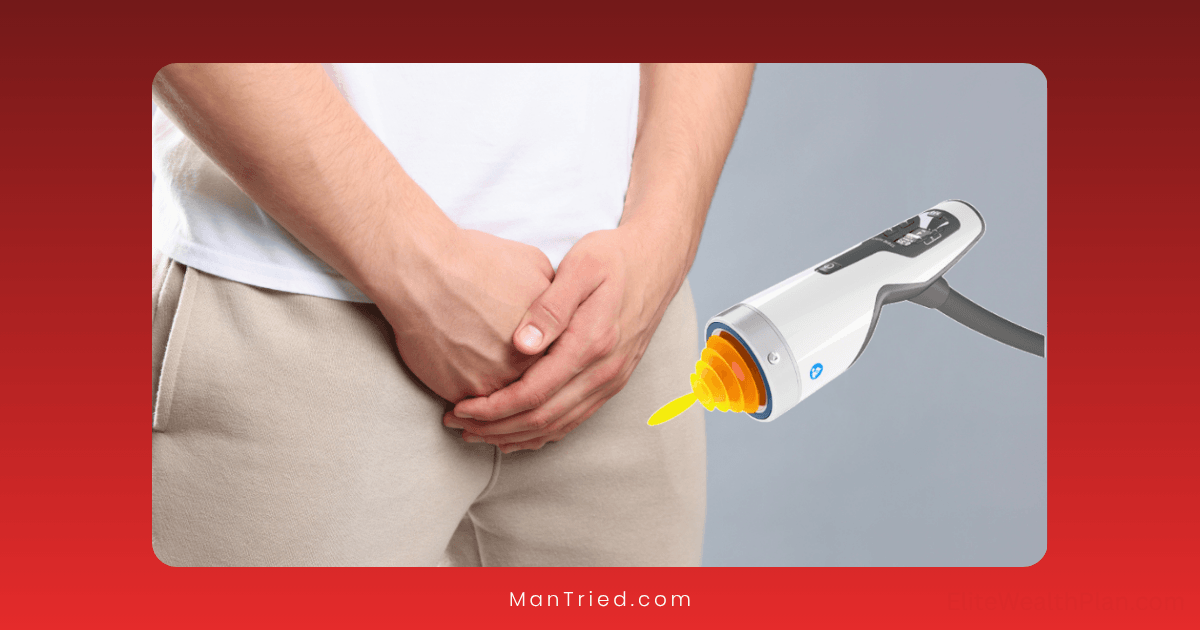
For the millions of men struggling with erectile dysfunction (ED), the landscape of treatment options has long been dominated by pills, injections, and implants. But an innovative approach using nothing more than precisely targeted sound waves is changing the conversation around ED treatment.
Low-intensity shockwave therapy (LiSWT) represents one of the most exciting developments in sexual medicine in decades. Unlike traditional treatments that temporarily enhance erections, LiSWT aims to actually restore natural erectile function by regenerating penile tissue.
But how exactly does this technology work? Is it effective? And is it right for you? Let’s dive into the science, evidence, and practical considerations of this groundbreaking treatment.
At its core, LiSWT is remarkably straightforward: focused sound waves are directed at penile tissue to stimulate healing and regeneration. But the biological magic happening beneath the surface is far more complex.
LiSWT uses acoustic pressure waves—essentially concentrated sound energy—delivered through a wand-like device placed against the skin of the penis. These waves are similar to those used in lithotripsy (kidney stone treatment) but at a much lower intensity.
According to the Cleveland Clinic, the procedure is generally painless, with many patients barely aware it’s happening during treatment. Each session typically lasts about 15 minutes and is performed in an outpatient setting without anesthesia.
The real fascination lies in how these sound waves trigger healing at the cellular level. According to research published in PMC, LiSWT works through several complementary mechanisms:
The controlled microtrauma from shockwaves stimulates:
This process, known as angiogenesis, improves blood flow to the penis—the fundamental requirement for healthy erections.
LiSWT has been shown to:
This neuroregeneration aspect is particularly important for men whose ED stems from nerve damage, such as after prostate surgery.
The therapy also:
Dr. James Anaissie, urologist and men’s health specialist, explains: “What makes shockwave therapy revolutionary is that it’s addressing the root causes of erectile dysfunction—vascular insufficiency, nerve damage, and tissue deterioration—rather than just temporarily compensating for these issues.”
With any emerging treatment, the crucial question is: What does the science say? The evidence for LiSWT has been building steadily since the first clinical study in 2010.
A comprehensive Cochrane review published in 2025 analyzed 21 randomized controlled trials with 1,357 participants and found:
A pivotal 2010 pilot study showed that all 20 men with vasculogenic ED experienced improved erectile function after six months of shockwave treatment, suggesting a potential success rate of up to 100% in carefully selected patients.
More realistically, larger studies indicate success rates around 60-75%, with the Cleveland Clinic reporting approximately 75% of patients expressing satisfaction with their results.
The research indicates that LiSWT is most effective for:
“Patient selection is crucial,” notes Dr. Rafael Carrion, Professor of Urology at the University of South Florida. “The best candidates are men with vascular insufficiency who haven’t progressed to severe ED. For these patients, shockwave therapy can be truly transformative.”
If you’re considering LiSWT, understanding the typical treatment journey can help set appropriate expectations.
While protocols vary somewhat between providers, the most common approach includes:
According to Healthline, the effects of treatment can last approximately one year, though some men report benefits for up to two years before requiring maintenance therapy.
During a typical LiSWT session:
No anesthesia, downtime, or recovery period is required. Most men return immediately to their normal activities.
Results from LiSWT are not immediate. According to the University of Utah, most patients begin seeing benefits within 1-3 months after completing treatment.
The improvement typically follows this pattern:
Dr. Anne Peters, endocrinologist and sexual medicine specialist, advises: “I tell my patients to be patient. Unlike pills that work immediately, shockwave therapy is triggering biological processes that take time to develop. The wait is worth it for those who respond well.”
Despite the promising research, several important factors should inform your decision about LiSWT.
LiSWT is not currently FDA-approved specifically for erectile dysfunction treatment in the United States. The American Urological Association classifies it as an experimental treatment, and the Sexual Medicine Society of North America recommends it be performed under research protocols.
This “off-label” status means:
The financial investment for LiSWT is substantial:
Dr. Tobias Köhler, urologist at Mayo Clinic, suggests: “Given the cost and experimental nature, I advise patients to thoroughly research providers, ask about their specific protocols and success rates, and ensure they’re working with board-certified urologists who specialize in sexual medicine.”
While LiSWT is generally considered safe, potential side effects include:
A critical warning: not all “shockwave” treatments are created equal. A 2022 review found that many clinics advertise “shockwave therapy” but actually provide radial wave therapy—a different technology that has not shown the same efficacy for ED.
True LiSWT uses focused waves that converge at a specific depth in the tissue, while radial waves disperse in a more superficial, less targeted manner. When researching providers, specifically ask if they use focused shockwave technology, not radial wave devices.
How does LiSWT stack up against other common approaches to erectile dysfunction?
Advantages of LiSWT:
Disadvantages of LiSWT:
Advantages of LiSWT:
Disadvantages of LiSWT:
Advantages of LiSWT:
Disadvantages of LiSWT:
Many specialists are finding that LiSWT works best as part of a comprehensive approach to erectile dysfunction.
LiSWT + PDE5 Inhibitors Research suggests that men who don’t respond to PDE5 inhibitors alone may respond after LiSWT treatment. The improved vascular health from shockwave therapy can enhance the effectiveness of medications.
LiSWT + Platelet-Rich Plasma (PRP) Some clinics offer combination therapy with PRP injections (sometimes called the “P-Shot”) following shockwave treatment. The theory is that PRP provides growth factors that enhance the regenerative effects of shockwaves.
LiSWT + Lifestyle Modifications The most successful outcomes often come when LiSWT is combined with:
Dr. Paul Thompson, sexual medicine specialist, emphasizes: “LiSWT isn’t a magic bullet—it’s most effective when part of a holistic approach to sexual health that addresses all contributing factors to erectile dysfunction.”
As research continues, several exciting developments are on the horizon:
Current research is focusing on identifying the ideal:
Several companies are developing lower-intensity devices for home use, though these currently lack substantial evidence for efficacy and safety.
Researchers are investigating specific combination protocols that may enhance outcomes, particularly for men with more severe ED or multiple contributing factors.
LiSWT represents a promising option for many men with erectile dysfunction, particularly those:
However, it may not be ideal for men with:
Low-intensity shockwave therapy offers a genuinely innovative approach to erectile dysfunction—one that aims to restore natural function rather than temporarily compensate for dysfunction. The scientific evidence continues to build, with most studies showing significant benefits for properly selected patients.
If you’re considering LiSWT, the most important steps are:
With the right provider and appropriate expectations, LiSWT may offer new hope for restoring natural erectile function and the confidence and satisfaction that comes with it.