🛍️ Products
❤️ Health
🌿 Wellness
💪 Performance
🤝 Relationships
🛍️ Products
❤️ Health
🌿 Wellness
💪 Performance
🤝 Relationships


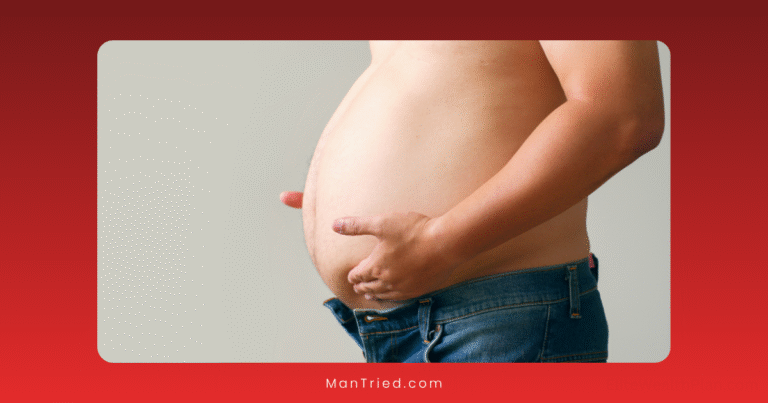
If you’re a man over 40 who’s noticed your waistline expanding despite your best efforts, you’re not alone. The battle against the bulge becomes significantly more challenging in midlife—and it’s not just about willpower or discipline.
Your body is undergoing fundamental changes that require a different approach to weight management than what worked in your 20s and 30s. The good news? With the right strategies tailored specifically for your changing physiology, sustainable weight management is absolutely achievable.
Before diving into solutions, it’s crucial to understand what you’re up against. Several biological factors make weight management more challenging after 40:
Research shows that metabolism naturally declines with age, with men typically experiencing a 2-5% decrease per decade after 40. This means you’re burning fewer calories at rest than you did previously.
“Many men don’t realize they need to adjust their caloric intake to account for this metabolic slowdown,” explains Dr. Robert Thompson, endocrinologist at University Health Center. “The same diet that maintained your weight at 35 may lead to weight gain at 45.”
After age 30, testosterone levels begin to decline at a rate of approximately 1% per year. By 40, this cumulative effect becomes more noticeable, with research from the University of Utah showing that lower testosterone contributes to:
Starting around age 30, men begin losing muscle mass—a condition called sarcopenia. This loss accelerates after 40, with research indicating men can lose up to 8% of muscle mass per decade. Since muscle burns more calories than fat, this creates a double challenge:
Beyond biology, midlife often brings lifestyle changes that compound weight management challenges:
The key word here is “sustainable”—crash diets and extreme exercise programs typically fail in the long run. Instead, focus on these evidence-based approaches designed specifically for the midlife male body:
Research published in BetterMe suggests that men over 40 should aim for 1.6 grams of protein per kilogram of body weight daily—significantly higher than the standard recommendation.
For a 180-pound man, that’s approximately 130 grams of protein daily, strategically distributed throughout the day:
“Protein timing matters almost as much as total intake,” notes nutritionist Sarah Williams. “Consuming 25-30 grams of high-quality protein within an hour of strength training optimizes muscle protein synthesis, which becomes increasingly important after 40.”
While cardio has its place, strength training becomes non-negotiable after 40. According to Mount Nittany Health, men should prioritize resistance training 2-3 times weekly with these guidelines:
A sample routine might include:
Monday: Lower body focus (squats, lunges, leg press)
Wednesday: Upper body push (chest press, shoulder press, triceps)
Friday: Upper body pull (rows, pull-ups/downs, biceps)
“The goal isn’t bodybuilding—it’s metabolic health,” explains fitness coach Michael Ramirez. “Even two 30-minute sessions weekly can significantly impact testosterone levels, muscle preservation, and metabolic rate.”
High-Intensity Interval Training (HIIT) has been shown to be particularly effective for men over 40, with research from Healthline demonstrating its ability to reduce body fat percentage while improving cardiovascular health.
The key is appropriate intensity and recovery:
A simple starter protocol:
“HIIT creates an ‘afterburn effect’ where your body continues burning calories at an elevated rate for up to 24 hours post-workout,” notes exercise physiologist Dr. James Chen. “This is particularly valuable for men over 40 whose baseline metabolism has declined.”
Intermittent fasting, particularly time-restricted eating, has shown promise for men over 40. The 16:8 method (16 hours fasting, 8 hours eating) can help:
According to The True Transformation, this approach works best when:
“For many of my male clients over 40, simply stopping eating after dinner at 7 PM and delaying breakfast until 11 AM creates a natural 16-hour fast that fits their lifestyle,” explains nutritionist Robert Johnson. “The key is consistency rather than perfection.”
While testosterone replacement therapy is an option for some men with clinically low levels, several natural strategies can help optimize your hormonal environment:
“Many men don’t realize that belly fat itself contributes to lower testosterone,” explains urologist Dr. Michael Stevens. “Fat tissue contains an enzyme called aromatase that converts testosterone to estrogen, creating a vicious cycle where weight gain leads to hormonal changes that promote further weight gain.”
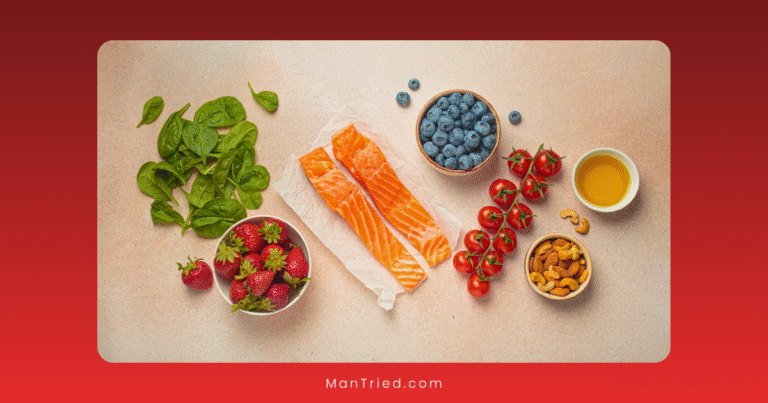
Multiple studies show that a Mediterranean-style diet supports sustainable weight management for men over 40. According to the Los Angeles Times, this approach includes:
This eating pattern supports:
“The Mediterranean diet isn’t about restriction—it’s about abundance of the right foods,” notes dietitian Maria Rodriguez. “My male clients over 40 find it sustainable because nothing is completely off-limits, but the emphasis on whole foods naturally creates a healthier calorie balance.”
Recovery becomes increasingly important after 40, as your body’s natural repair mechanisms slow down. Prioritize:
“Recovery isn’t just about physical repair—it’s about hormonal optimization,” explains sports medicine physician Dr. Lisa Chang. “Poor sleep and chronic stress create a hormonal environment that promotes fat storage and muscle breakdown, regardless of your diet and exercise program.”
Joe, 47: “After my annual physical showed my testosterone at the low end of normal, I implemented strength training twice weekly and increased my protein intake to about 150g daily. Within six months, I lost 22 pounds of fat, gained 8 pounds of muscle, and my testosterone increased by 24%—all without medication.”
Mike, 52: “Time-restricted eating was my game-changer. I maintain a 16:8 schedule on weekdays, eating between noon and 8 PM. Combined with two HIIT sessions weekly, I’ve lost 35 pounds over 10 months and kept it off for two years. My energy levels are better than they were in my 40s.”
Michael, 58: “After struggling with weight for years, I focused on building muscle rather than just losing weight. At 58, I’m actually stronger than I was at 45, and while I only lost about 15 pounds, my body composition completely changed. My doctor says my metabolic markers are better than most 40-year-olds.”
The most effective approach combines multiple strategies tailored to your specific situation. Start with these steps:
Remember, the goal isn’t perfection but progress. Small, consistent changes yield remarkable results over time.
Weight management after 40 requires a different approach than what worked in your younger years. By understanding the unique challenges of the midlife male body and implementing strategies specifically designed to address them, you can achieve sustainable results.
Focus on preserving muscle, optimizing hormones, strategic exercise, and quality nutrition rather than simply cutting calories. This comprehensive approach not only manages weight but improves overall health, energy, and quality of life—setting you up for decades of vitality ahead.
Have you found effective weight management strategies after 40? Share your experience in the comments below.